
You’ve probably tried changing your moisturizer at least twice in the past year. Maybe you added a vitamin C serum, maybe you went back to basics. And the skin got a little better, then a little worse, then sort of the same. You keep looking at your face in different lighting wondering what you’re missing. Here’s the thing — you might be looking in the wrong direction entirely.
I used to do the same thing. Creams, serums, patches, masks. I was convinced the answer was out there, in some product I hadn’t found yet. What I didn’t understand then — and what took me years to actually grasp — is that what’s happening on your face often has very little to do with what you’re putting on it. A lot of it starts in your gut. Specifically, in the lining of your intestines, which turns out to have a much more direct line to your skin than most people realize. When that lining gets compromised — when tiny gaps form that let particles through that shouldn’t be there — your skin often ends up paying the price. Inflammation shows up in places you can see, even when the problem started somewhere you can’t.
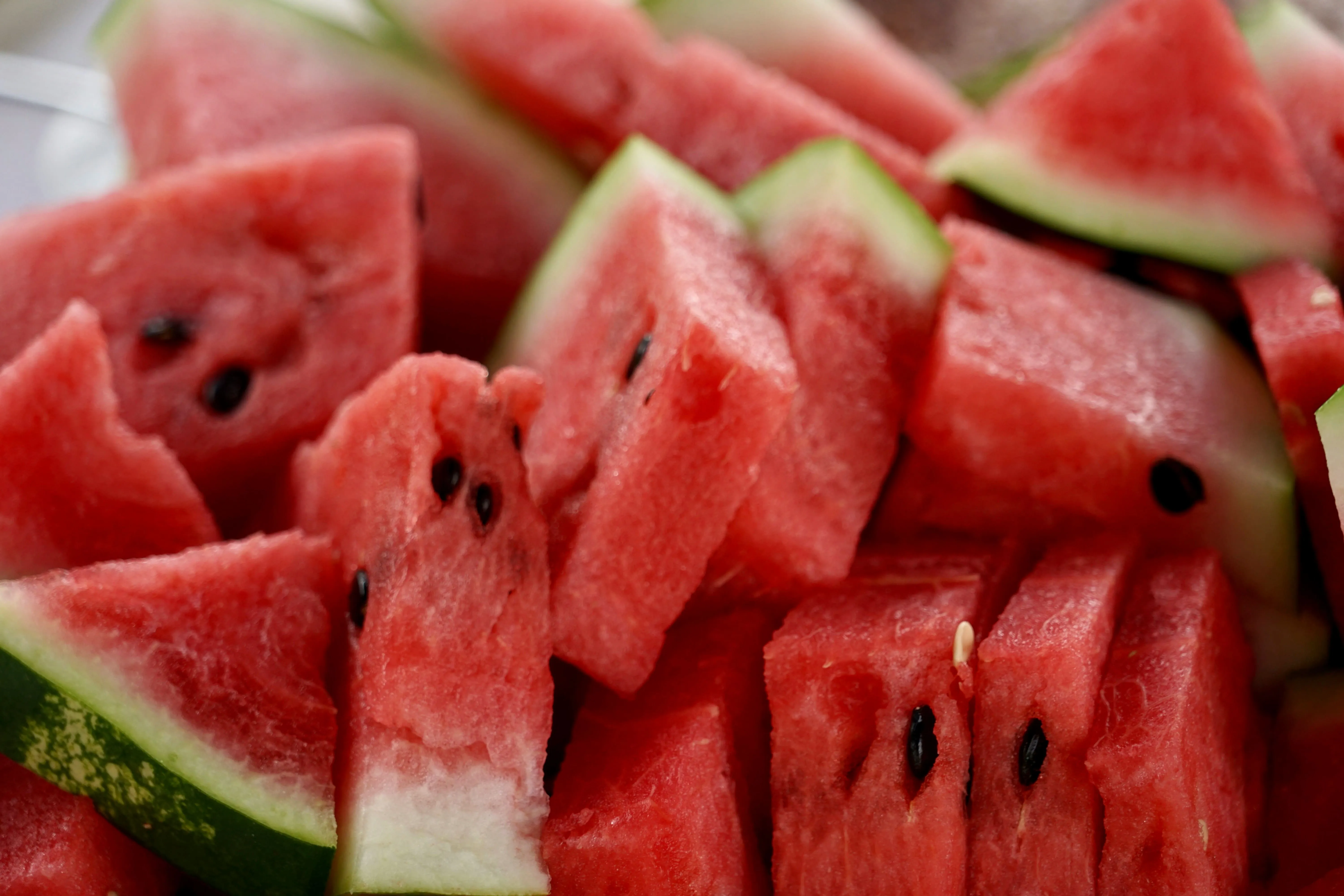
Here’s where it gets interesting: one of the most effective ways to support that intestinal lining comes from a compound found in one of the most unassuming foods you can buy at any grocery store. Watermelon. Specifically, an amino acid called L-citrulline — which your body converts into something your gut cells use to repair and maintain that protective barrier. I want to explain how that works, what “leaky gut” actually means in plain language, and why this matters if you’ve been struggling with skin that just won’t cooperate.
What’s Actually Happening: The Gut-Skin Pipeline
Your gut and your skin are in constant communication. Not metaphorically — biochemically. There’s a well-documented pathway that researchers call the gut-skin axis, and it describes how the state of your intestinal environment directly influences inflammatory signals that travel through your bloodstream and eventually show up on your skin.
Your Gut Lining Is a Gatekeeper — And It Can Be Compromised
Think of the lining of your intestines as a tightly controlled security checkpoint. When everything is working as it should, nutrients pass through and unwanted particles stay out. But when the gut lining becomes more permeable — meaning those checkpoints develop small gaps — things start getting through that don’t belong in your bloodstream. Bacterial fragments called lipopolysaccharides (LPS) are the main culprit. They enter circulation, your immune system detects them as a threat, and it triggers a systemic inflammatory response.
That inflammation doesn’t stay contained. It travels. And for many women, it lands on the skin.
A 2024 clinical review published in PMC — titled “From Leaky Gut to Leaky Skin” — documented exactly this cascade: gut dysbiosis producing pro-inflammatory signals that reach the skin as one of the primary target organs. The skin, the review noted, is one of the largest epithelial surfaces in the body, and it responds to gut-derived inflammation in ways that show up as redness, breakouts, dryness, and barrier disruption.
The “Leaky Gut” Conversation — What It Actually Means
I want to be clear about something before we go further: “leaky gut syndrome” as a named diagnosis is not recognized by mainstream medicine the same way conditions like IBS or Crohn’s disease are. The underlying mechanism — increased intestinal permeability — is well-documented and actively studied. The controversy is mostly about the label, which has been over-commercialized in the wellness space.
The honest picture is somewhere in the middle. Increased intestinal permeability is real. It’s associated with measurable inflammation. And that inflammation does affect the skin — consistently. A 2025 study published in Scientific Reports analyzed blood biomarkers in 50 adult patients with atopic dermatitis and found a significant association between leaky gut markers and disease severity. The connection isn’t theoretical — it’s showing up in clinical data.
Why L-Citrulline Comes Into This
This is where I want to slow down and be specific, because this amino acid tends to get talked about in athletic performance circles or cardiovascular health research. Its role in gut barrier function is less commonly discussed, and it deserves more attention.
L-citrulline is an amino acid your body uses to produce arginine — which in turn produces nitric oxide. Nitric oxide supports blood flow to the gut lining and plays a role in maintaining the integrity of the tight junctions that keep your intestinal barrier sealed. When citrulline levels are low, nitric oxide availability drops, and the gut barrier can become more vulnerable to the kind of permeability that drives systemic inflammation.
A 2021 review published in Nutrients (PMC) confirmed that citrulline has anti-inflammatory, antioxidative, and immunomodulatory properties that specifically combat disruptions to intestinal integrity. Plasma citrulline level is now used by researchers as a quantitative biomarker for intestinal absorptive capacity — low plasma citrulline is a recognized marker of compromised gut barrier function. That’s not a supplement marketing claim. That’s an established research metric.
Why the Standard Skincare Advice Only Gets You Part of the Way
I don’t want to dismiss what you’ve already been doing. A good moisturizer matters. SPF is non-negotiable. The right cleanser can make a real difference in how your skin feels day to day. These aren’t wasted efforts — they’re just incomplete when the root cause is internal.
Here’s what topical products structurally cannot do: they can’t reach the source of inflammation when that source is in your gut. Your skin’s outer layer — the stratum corneum — is designed to be a barrier. It keeps things out, including a significant portion of what you apply to the surface. A 2021 study in PMC confirmed this limitation directly, noting that topical treatments for inflammatory skin conditions are difficult to resolve completely because the stratum corneum physically restricts penetration to the deeper layers where the immune response is happening.
I want to be direct about something: the skincare industry has a natural incentive to keep the solution at the surface. Products are measurable, purchasable, visible. The gut is harder to package and sell. That’s not cynicism — it’s just the business model. The science, though, points toward an internal dimension that topicals can’t replace.
A 2023 review in PMC made this point with a striking comparison: in studies of skin conditions, oral interventions consistently showed greater impact than topical ones when the root cause was systemic inflammation. Oral antibiotics outperformed topical antibiotics on skin disease outcomes. That finding says a lot about where the real leverage often is — and it’s not on the surface.
What the Evidence Points Toward — Including a Humble Slice of Watermelon
So what actually helps? I want to be careful here, because the honest answer depends on what’s driving your skin’s behavior in the first place. If your skin concerns are primarily hormonal, gut-focused changes will still be relevant but won’t be the whole picture. If a condition is largely genetic, no food resolves a structural predisposition. What I’m describing applies to women whose skin inflammation has an internal, gut-related component — which, based on the research, is a significant portion of women dealing with persistent skin concerns that don’t fully respond to topical treatment.
Supporting your gut lining through diet: The intestinal barrier needs raw materials to maintain its tight junctions. Glutamine — found in eggs, bone broth, and certain vegetables — is the primary fuel source for intestinal cells. Zinc supports repair. Fermented foods like yogurt, kefir, and kimchi supply the bacterial diversity that helps keep gut dysbiosis in check. None of these are magic on their own. Together, they shift the environment in a measurable direction.
L-citrulline from food: This is where watermelon earns its place in this conversation. Research from USDA and Texas A&M confirmed watermelon as the richest dietary source of L-citrulline — a finding that’s been replicated across multiple studies since 2007. What’s less commonly known, and genuinely counterintuitive: a 2023 study from North Carolina A&T University used a gold-standard human intestinal epithelial cell model (Caco-2 cells) to measure citrulline bioavailability from different parts of the fruit. The rind showed a higher percentage of citrulline transport than the flesh, even though the flesh contains higher absolute citrulline content. The rind is often discarded entirely.
You don’t need to start eating watermelon rind (though some people blend it into smoothies). The point is that regular consumption of the fruit itself is a genuinely useful, accessible source of a compound with documented gut barrier benefits — and one that most women aren’t thinking about in this context at all.
Reducing what disrupts the barrier: Alcohol, processed foods high in emulsifiers, chronic stress, and certain medications — particularly NSAIDs taken regularly — are well-documented contributors to increased intestinal permeability. Removing or reducing these isn’t as exciting as adding something new, but the evidence for their impact on gut lining integrity is substantial and consistent.
Every woman’s body is different — and I mean that as something important, not as a legal disclaimer. If you have an autoimmune condition, are managing a diagnosed gut disorder, or are on immunosuppressant medication, the picture looks considerably more complex than what I’ve described here. Dietary changes can still play a supportive role, but they need to happen alongside your healthcare provider’s guidance, not instead of it.
What This Means for Your Skin Specifically
The practical implication of all of this is actually quite simple, even if the science behind it isn’t: if your skin isn’t responding to what you’re putting on it, the next reasonable question is what’s happening inside it.
You don’t need to overhaul everything at once. The gut-skin connection is real and well-documented, but it’s not a switch you flip. Most women who see meaningful change through gut-focused approaches do so over weeks and months — not days. The changes tend to be gradual: less reactive skin, fewer inflammatory flares, a quality of texture and resilience that topicals alone can’t consistently produce.
If your skin concerns are severe, persistent, or accompanied by digestive symptoms — bloating, irregularity, discomfort after eating — that’s a meaningful signal that a conversation with a gastroenterologist or functional medicine doctor would be worth having. Self-directed dietary changes are a reasonable starting point for mild to moderate concerns. They’re not a substitute for clinical evaluation when something deeper is going on.
A Note From Anne
When I first started understanding the gut-skin connection — really understanding it, not just reading headlines about it — what struck me most wasn’t the science itself. It was the relief of having a framework that finally made sense of something I’d been struggling with for years.
Your skin is not broken. It’s communicating. And more often than the skincare industry would have you believe, it’s communicating something that starts far below the surface. Understanding that doesn’t mean abandoning the creams and serums. It means adding a dimension to how you think about your skin — one that makes the whole picture clearer.
That’s what I’m here for.
Frequently Asked Questions
Can the gut actually cause skin problems?
The evidence here is consistent: yes, gut health directly influences skin health through inflammatory pathways. A compromised gut lining allows bacterial fragments into the bloodstream, triggering systemic inflammation that frequently manifests on the skin. This doesn’t mean every skin concern has a gut origin — but for many women with persistent conditions that don’t respond to topical treatment, the gut is worth investigating.
What exactly is L-citrulline and why does it matter for my skin?
L-citrulline is an amino acid found naturally in watermelon that your body converts into arginine, which produces nitric oxide. Nitric oxide supports blood flow to the gut lining and helps maintain the tight junctions that keep your intestinal barrier intact. When that barrier is stronger, fewer inflammatory signals reach the bloodstream — and eventually, the skin. The benefit to skin is indirect but grounded in a documented gut-barrier mechanism.
How long does it take for gut health changes to show up on the skin?
This varies considerably between women. Some notice changes in skin reactivity and texture within a few weeks of consistent dietary changes. For others, meaningful improvement takes several months. The timeline depends on how disrupted the gut environment was to begin with, what changes are being made, and individual factors like genetics and hormone status. Both timelines are normal — this is not a fast process, and expecting overnight results is a setup for giving up too early.
Is “leaky gut” a real medical condition?
The underlying mechanism — increased intestinal permeability — is scientifically well-established and actively studied. “Leaky gut syndrome” as a named diagnosis is more contested in mainstream medicine, partly because it’s been heavily commercialized. The science supports the mechanism; the controversy is mostly about the label. If you’re experiencing symptoms that suggest gut barrier compromise, the right conversation is with a gastroenterologist using the clinical term.
Does eating more watermelon actually help your skin?
Watermelon is the richest dietary source of L-citrulline, which has documented gut barrier benefits through the nitric oxide pathway. That said, it’s not a standalone answer for skin concerns. It’s one useful part of a broader approach to supporting gut health — alongside reducing gut-disrupting inputs and adding bacterial diversity through fermented foods. Think of it as a genuinely meaningful addition to a pattern of eating, not a cure on its own.