You’ve tried the spot treatments. You’ve tried the facewashes, the prescription creams, the “gentle cleansers for sensitive skin.” You’ve probably cut out chocolate at some point — not because anyone explained why it might help, just because someone told you it would. And somewhere along the way, you started to wonder if your skin was just going to be like this forever.
Here’s the thing nobody explains well: acne that keeps coming back, the kind that doesn’t fully respond to topical treatments no matter how consistent you are, is often not a surface problem. It’s a signal. And a significant part of that signal is coming from your gut. The bacteria living in your digestive system — trillions of them — don’t just help you digest food. They regulate inflammation throughout your entire body, including in your skin. When that ecosystem is off balance, it doesn’t stay quiet. For a lot of women, it shows up as breakouts.
What I want to walk you through is the actual mechanism — not in a vague way, but in a way that makes clear why certain foods calm your skin down and others consistently make it worse. Because once you understand what’s happening, the food choices stop feeling like arbitrary rules and start making real sense.
Why Your Gut Is Involved in Something That Looks Like a Skin Problem
Most of what we’re taught about acne focuses on pores — clogged pores, bacteria on the surface, oil production. And those things are real. But they’re often the result of something, not the cause. For many women, the cause is happening much deeper in the body than any cleanser can reach.
Your gut houses roughly 39 trillion microorganisms — bacteria, fungi, and other microbes — that collectively regulate your immune system, your hormones, your metabolism, and your skin. When the balance of that community is disrupted (a state researchers call gut dysbiosis), your immune system shifts toward a state of low-grade, chronic inflammation. That inflammation doesn’t stay neatly contained in your digestive tract. It circulates systemically. And your skin, one of the first places the immune system shows up, responds to it.
A 2024 study published in Scientific Reports analyzed 412 distinct gut microbes and found a causal relationship between specific bacterial species and acne vulgaris — particularly through immune regulation and a cellular signaling pathway called mTOR, which governs sebum production. This wasn’t correlation. The study design specifically tested for causal direction. The gut bacteria living inside you can, in measurable ways, determine whether your skin breaks out.
When the Gut Wall Becomes More Permeable
The lining of your intestine acts as a selective barrier: it lets nutrients through into the bloodstream while keeping harmful substances out. When that barrier becomes more permeable than it should be — a process often called “leaky gut,” though the clinical term is increased intestinal permeability — fragments of bacterial cell walls, called lipopolysaccharides (LPS), can slip through into circulation.
Once LPS reaches the bloodstream, the immune system treats it as an invader. The inflammatory response that follows is systemic. In the skin, this kind of chronic, low-level inflammation creates exactly the conditions that make acne more likely to form and harder to resolve.
The Hormonal Angle Most Articles Miss
This is the part that genuinely surprised me when I first came across it — and I think it reframes the acne conversation for women in a meaningful way.
Certain bacteria in the gut produce an enzyme called beta-glucuronidase. What this enzyme does is reactivate estrogen that the liver has already processed and tagged for removal. When beta-glucuronidase activity is elevated — which happens when the gut microbiome is out of balance — more estrogen gets recirculated into the body rather than excreted. In women, this hormonal recycling can drive sebum production and fuel the kind of breakouts that cluster along the jawline and chin.
This means that some of what women experience as “hormonal acne” is, at least in part, a gut problem wearing a hormonal disguise. Not caused by the ovaries. Amplified by what’s happening in the gut.
Why the Standard Skincare Approach Only Gets You Part of the Way
I want to be clear about something: the dermatologist who prescribed your topical retinoid wasn’t wrong. Topical treatments have a real role — reducing surface bacteria, regulating cell turnover, keeping pores clearer. These things matter.
But a 2022 review in PMC studying persistent adult female acne described it plainly: the condition is “often refractory to conventional treatment.” That’s clinical language for it keeps coming back even when you do everything right. The reason, according to the same research, is that adult female acne is multifactorial — driven by hormones, immune function, chronic inflammation, diet, and gut health — in combination. Treating the surface addresses one layer of a multi-layered problem.
Most of us figure this out the hard way. The routine gets dialed in, the topicals work for a while, and then a stressful month hits, or a hormonal shift, or a sustained stretch of poor eating — and the skin flares again. At that point, adding another serum to the lineup isn’t the answer.
The Foods That Can Make a Measurable Difference — And Why
The goal here isn’t a list of rules to follow. It’s understanding the mechanism well enough that the choices you make feel logical rather than arbitrary.
High-glycemic foods — white bread, sugary drinks, processed snacks, refined carbohydrates — cause sharp spikes in blood sugar and insulin. Elevated insulin directly signals the skin to produce more sebum, and it increases the activity of a hormone called IGF-1 (insulin-like growth factor), which is consistently associated with acne severity in research. A low-glycemic diet has been linked to measurable improvements in acne across multiple clinical studies — not because avoiding refined carbs is magical, but because keeping insulin stable removes one of the key drivers of sebum overproduction.
Dairy is more complicated, and I want to be honest about that nuance. The evidence for dairy as a universal acne trigger is inconsistent — some women are significantly affected, others aren’t at all. What research points toward is milk specifically (more so than cheese or yogurt), possibly because of the hormonal content that naturally occurs in cow’s milk and its effect on IGF-1 levels. If you’re going to experiment with cutting something, milk is the more likely candidate than fermented dairy.
Ultra-processed foods — anything heavy in refined oils, emulsifiers, and additives — appear to reduce gut microbiota diversity and increase intestinal permeability over time. The research here is still maturing, but the pattern across multiple study groups is consistent enough to take seriously: a diet high in ultra-processed foods correlates with a less diverse gut microbiome and a more inflammatory systemic environment.
On the other side of the equation, fiber is probably the single most important dietary input for a healthy gut microbiome. The beneficial bacteria in your gut ferment fiber and produce short-chain fatty acids — particularly butyrate — which directly reinforce the integrity of the gut lining and have anti-inflammatory effects that travel systemically. You can’t supplement your way to good butyrate production. You have to feed the bacteria that make it. Legumes, vegetables, whole grains, fruits: these are the inputs.
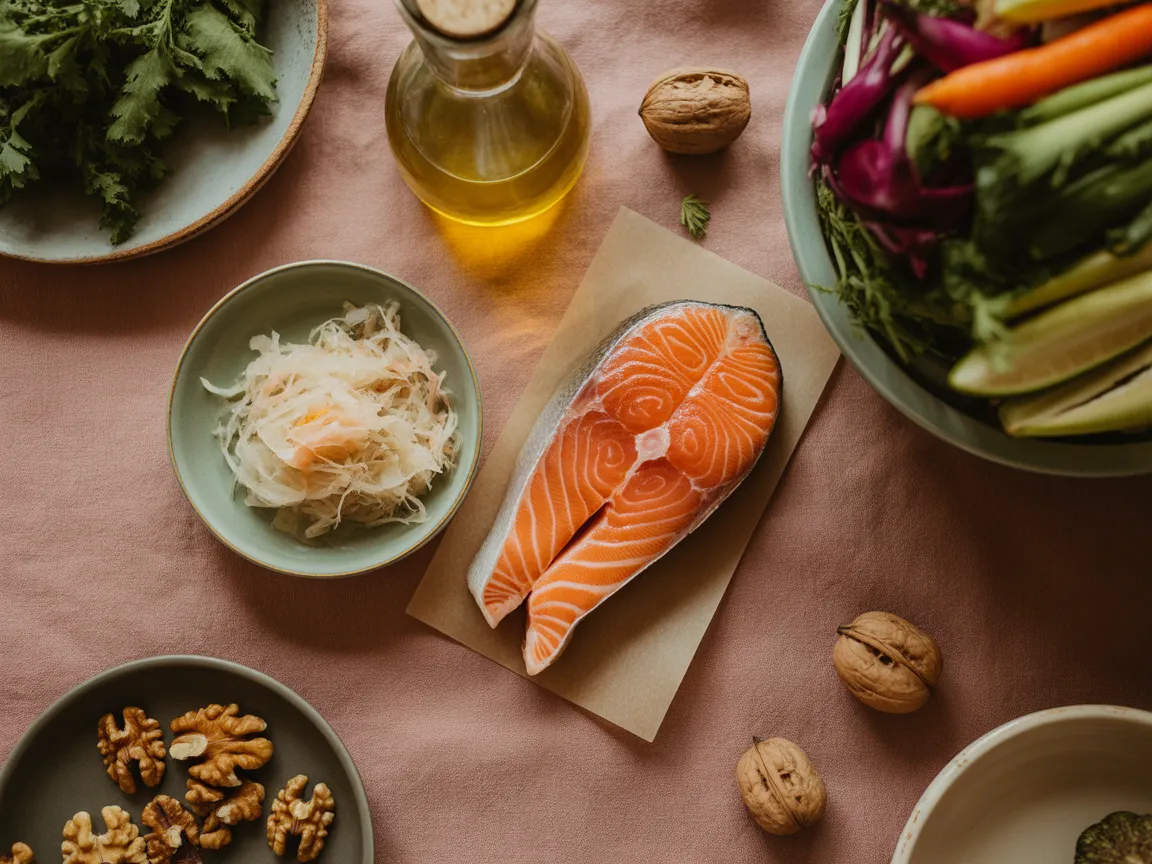
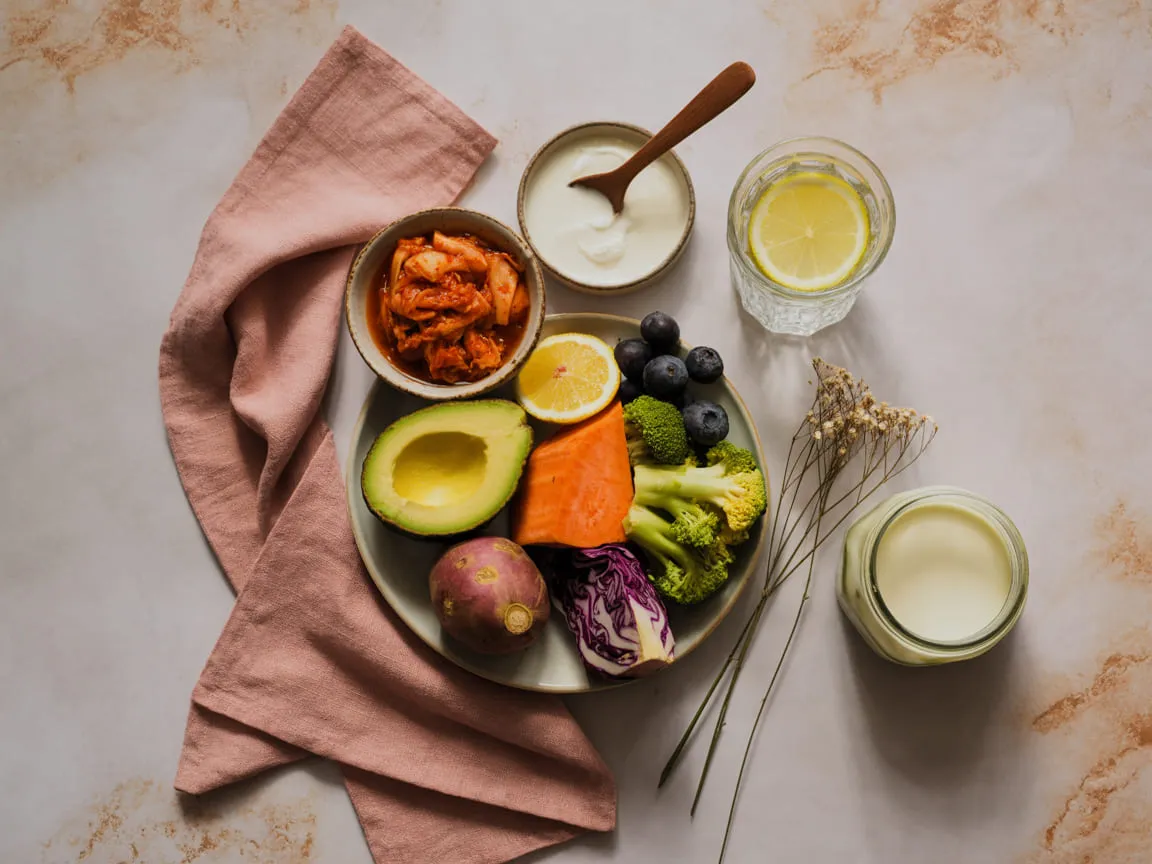
Fermented foods — unsweetened yogurt, kefir, kimchi, sauerkraut, miso — introduce beneficial bacteria and have been shown to increase microbial diversity and reduce inflammatory markers. They work well alongside fiber, not as a substitute for it.
One more worth calling out: cruciferous vegetables (broccoli, cauliflower, Brussels sprouts, cabbage) contain compounds that support the liver’s processing of estrogen. If you’ve read the beta-glucuronidase section, you’ll understand why that’s directly relevant to hormonal acne in women — they help your body clear estrogen more efficiently before gut bacteria have a chance to reactivate it.
Every woman’s body responds differently here, and I mean that genuinely, not as a disclaimer. Some women notice changes in their skin within weeks of dietary shifts. For others, it takes months. And if you’re dealing with a condition like PCOS, endometriosis, or a significant gut health issue, the picture is more complex and worth discussing with a physician who understands the gut-hormone relationship.
What This Means for Your Skin Specifically
If your acne has felt resistant — the kind that responds to treatment and then comes back, that flares with stress or hormonal changes, that shows up predominantly along the jawline or chin — it’s worth considering whether the gut is part of the picture.
Dietary changes take time to show up in the skin. The gut microbiome can shift meaningfully within four to eight weeks of sustained dietary change, but the skin has its own renewal cycle layered on top of that. This is not a rapid fix. It’s a shift in the conditions that drive the problem in the first place.
If your acne is severe, cystic, or significantly affecting your daily life, working with a dermatologist alongside any gut-focused changes makes sense — not instead of. Both can be true at the same time: topical and systemic support aren’t mutually exclusive. The goal is to address the surface and the source together.
A Note From Anne
I spent a long time treating my skin like it was the problem. Every new flare felt like something I’d done wrong — a failure of routine, or discipline, or choices. What changed things for me was understanding that my skin was showing me something happening deeper in the body, and once I started paying attention at that level, things actually began to shift.
That’s what I want this site to offer you. Not a shortcut — there isn’t one. But the understanding that makes it possible to make genuinely useful choices, instead of just reaching for the next thing someone recommended.
Your skin is communicating. The gut-skin connection is one of the clearest ways it does that.
Frequently Asked Questions
Can changing my diet really affect my acne?
Yes — though the degree varies considerably between women. The most consistent evidence points toward reducing high-glycemic foods and ultra-processed foods as the dietary shifts most likely to make a measurable difference. A 2024 study in Scientific Reports confirmed a causal link between specific gut bacteria and acne development through immune regulation and sebum control pathways, which supports why dietary changes that influence the gut microbiome can have a real effect on skin.
How long does it take to see skin changes from gut health improvements?
Realistically, somewhere between four to twelve weeks for most women — and sometimes longer. The gut microbiome can begin shifting within a few weeks of sustained dietary change, but the skin has its own renewal cycle on top of that. Changes in sebum production and inflammation don’t show up overnight. Expecting results in the first two weeks tends to lead to abandoning an approach that, with more time, might have worked.
Does everyone with acne have a gut issue?
Not necessarily. Acne has multiple drivers — genetics, hormones, skincare products, medications, and gut health among them. The gut is often a contributing factor in adult women with persistent or hormonal acne, but it’s rarely the only factor. If your acne is a newer development, accompanies other symptoms like bloating or irregular cycles, or doesn’t respond well to conventional treatment, the gut angle is worth exploring more specifically.
Is dairy the main food to cut for acne?
Dairy is one of the more researched dietary acne triggers, but it’s not universal. Milk specifically — more so than cheese or yogurt — appears to be the more likely culprit, possibly because of its effect on IGF-1 levels. Some women see significant improvement after cutting milk; others see no change. High-glycemic foods are actually a more consistent trigger across studies than dairy is, which is worth knowing before you spend three months going dairy-free and wondering why nothing changed.
What does “leaky gut” actually have to do with acne?
When the gut lining becomes more permeable than normal, fragments of bacterial cell walls called lipopolysaccharides can enter the bloodstream and trigger an immune response. That immune response creates systemic inflammation which, in the skin, creates conditions that make acne more likely to form and harder to resolve. It’s not a direct one-to-one line in every person, but it’s a well-documented mechanism that helps explain why gut health shows up so consistently in skin outcomes.